
Physiotherapy After Surgery: Why Rehabilitation Is as Important as the Operation
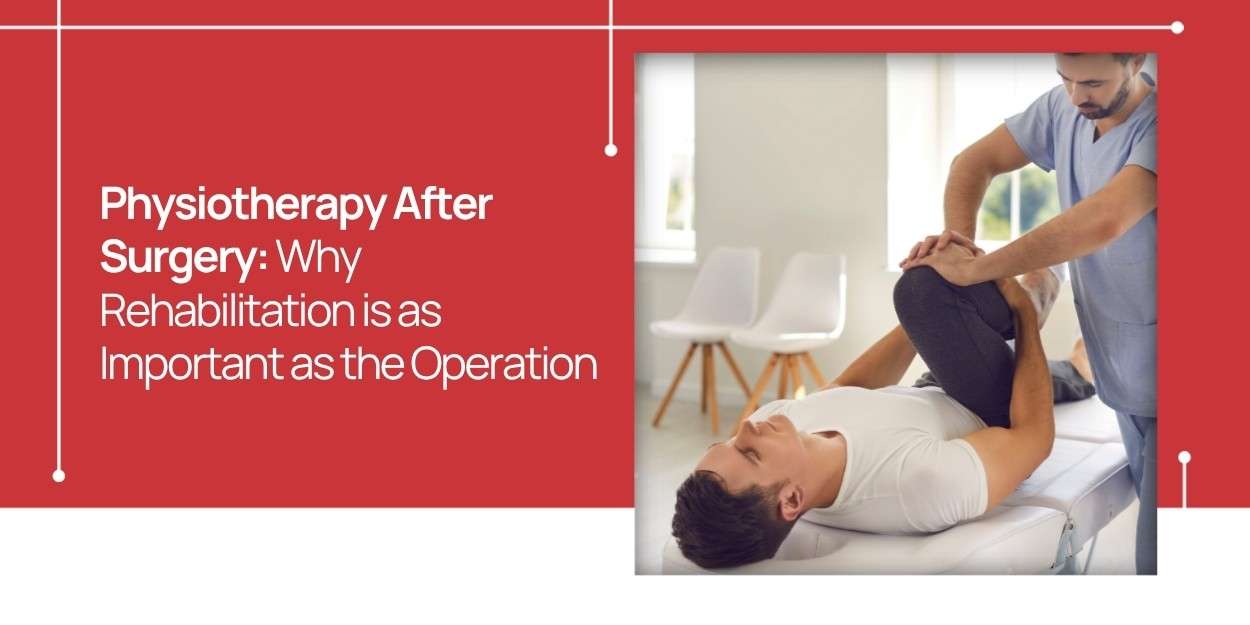 Most people spend considerable time researching surgeons, comparing hospitals, and preparing themselves mentally for an operation. Yet very few give the same level of thought to what happens after they leave the operating theatre. This is where rehabilitation begins, and in many cases, it is this phase that truly determines how well a patient recovers.
Surgery corrects a structural problem. It repairs a damaged knee joint, removes diseased tissue, realigns a fractured bone, or decompresses a nerve. But the body still has to learn how to function with that correction. Muscles have weakened from disuse. Scar tissue forms around the surgical site. The nervous system needs to relearn movement patterns. Without guided physiotherapy, all of this can go wrong, quietly and gradually, until limited mobility or chronic pain becomes the new normal.
At Axon Speciality Hospital in Indiranagar, Bangalore, post-surgery rehabilitation is treated as an essential part of the treatment plan, not an optional add-on. This article explains why that approach makes all the difference.
What Surgery Does and What It Cannot Do
A well-performed surgical procedure creates the conditions for healing. It does not complete the healing on its own. This is a distinction that matters enormously for patient outcomes, particularly in orthopaedic and musculoskeletal surgeries.
Take knee joint replacement as an example. The surgeon removes the damaged joint surfaces and replaces them with carefully fitted implants. The mechanical problem is resolved. But the muscles surrounding the knee, particularly the quadriceps, have typically been weakened for months or years before the surgery due to pain and reduced activity. The joint capsule has been opened and repaired. Swelling and inflammation will follow the procedure.
Without a structured physiotherapy programme after knee joint replacement surgery, patients risk stiffness that restricts how far the knee can bend, muscle wasting that makes walking unstable, and scar tissue adhesions that physically limit joint movement. A technically excellent surgery can produce a poor outcome if rehabilitation is neglected.
What Happens Inside the Body After Surgery
Understanding the biological events that follow surgery helps explain why physiotherapy is timed and structured the way it is.
In the first 48 to 72 hours, the body mounts an inflammatory response at the surgical site. Swelling, warmth, and pain are expected. This is a normal part of tissue healing, but movement during this stage must be carefully controlled rather than avoided entirely. Complete rest at this point actually slows healing and accelerates muscle loss.
From day three onwards, the body begins laying down new collagen fibres to repair damaged tissue. The quality of this scar tissue depends partly on how the area is moved during healing. Controlled, guided movement encourages collagen fibres to align properly along lines of stress, producing stronger, more flexible scar tissue. Without movement, fibres form in a disorganised pattern, contributing to stiffness and reduced function.
By weeks three to six, muscle atrophy becomes a serious concern. Research consistently shows that surgical patients can lose a measurable percentage of muscle mass in an affected limb within the first two weeks of reduced activity. Rebuilding this muscle requires progressive, targeted exercise under the supervision of a trained physiotherapist.
The Four Phases of Post-Surgery Rehabilitation
Phase 1: Acute Recovery (Days 1 to 14)
The focus in this phase is managing pain and swelling while introducing gentle, controlled movement. Physiotherapy at this stage typically includes ankle pumps to prevent blood clots, gentle range-of-motion exercises, breathing exercises in cases of chest or abdominal surgery, and assisted walking with support. The goal is to get the patient moving safely as early as possible.
Phase 2: Intermediate Rehabilitation (Weeks 2 to 6)
As swelling reduces and the surgical wound heals, exercises become more targeted. For patients recovering from knee or hip surgery, this phase focuses on restoring joint range of motion, beginning weight-bearing exercises, and retraining balance. Soft tissue mobilisation by the physiotherapist helps prevent scar tissue from restricting movement.
Phase 3: Strengthening (Weeks 6 to 12)
This is the phase where muscle strength is progressively rebuilt. Resistance exercises are introduced, walking distance is increased, and functional activities such as stair climbing and getting up from a chair are practised. For patients who are physically active, sport-specific or occupation-specific tasks are incorporated.
Phase 4: Return to Full Function (Weeks 12 and Beyond)
The final phase focuses on returning the patient to the activities they want to do, whether that is walking comfortably in a park in Bangalore, returning to work, or resuming recreational sport. Progress is measured against the patient’s own functional goals, not a generic timeline.
Pain Management and Physiotherapy Work Together
One of the most common reasons patients fall behind in their rehabilitation is pain. If movement hurts, the natural instinct is to avoid it. This avoidance, while understandable, accelerates stiffness, prolongs muscle weakness, and can lead to a cycle of fear-avoidance where patients move less and less.
Effective post-surgery rehabilitation requires that pain is managed well enough to allow therapeutic movement. This does not mean eliminating all discomfort, but it does mean keeping pain at a level where the patient can participate meaningfully in exercises.
The pain management specialists at Axon Speciality Hospital in Bangalore work alongside the physiotherapy team to ensure patients are not held back from their recovery by undertreated pain. This coordination between pain care and rehabilitation is particularly important in the first four to six weeks after surgery, when patients are working hardest on regaining range of motion.
Surgeries That Demand Dedicated Physiotherapy
While physiotherapy is beneficial after virtually any major surgical procedure, certain surgeries carry a particularly high risk of poor outcomes without structured rehabilitation:
- Knee joint replacement, where quadriceps strength and joint flexion must be restored to allow normal daily activities
- Hip replacement, where gait retraining and hip stabiliser strengthening are essential for safe walking
- Spinal surgery, where core strengthening and postural retraining protect the surgical repair and prevent recurrence
- Shoulder surgery, where rotator cuff rehabilitation requires careful progressive loading over several months
- Cardiac surgery, where cardiac rehabilitation physiotherapy improves heart function and reduces readmission rates
- Ligament reconstruction in the knee, which requires a phased return-to-sport programme spanning six to twelve months
In each of these cases, the physiotherapist is not simply helping the patient feel better. They are directly influencing the long-term function of the surgical repair.
What Happens When Rehabilitation Is Skipped
Patients who leave hospital after surgery and wait weeks before beginning physiotherapy, or who stop attending sessions once they feel reasonably comfortable, often experience outcomes that fall far short of what the surgery was capable of delivering.
Common consequences of inadequate post-surgery rehabilitation include permanent loss of joint range of motion that does not improve no matter how much time passes, chronic weakness in the muscles around the operated area leading to instability and compensatory injuries, prolonged pain that shifts from surgical pain to movement-related pain caused by dysfunctional movement patterns, and increased risk of falling, particularly in older patients recovering from hip or knee surgery.
In a significant number of cases, patients who skip rehabilitation end up returning for further medical care, including repeat surgery, to address complications that were directly caused by inadequate recovery.
Integrated Orthopaedic and Rehabilitation Care at Axon
At Axon Speciality Hospital, rehabilitation is built into the surgical care pathway rather than treated as a separate service. The orthopaedic care team in Bangalore coordinates directly with physiotherapy from the point of surgical planning, so that by the time a patient wakes up after their procedure, a personalised rehabilitation programme is already in place.
This integrated model means there is no gap between the surgical team and the rehabilitation team. Progress is monitored at each stage, exercises are adjusted based on how the patient is responding, and the end goal is always full, functional recovery rather than simply wound healing.
For patients in Indiranagar and the wider Bengaluru area, this level of coordinated post-surgery care is available close to home, removing one of the most common barriers to consistent rehabilitation attendance.
Your Recovery Deserves as Much Attention as Your Surgery
Surgery is often the beginning of a patient’s journey back to full health, not the end of it. The weeks and months that follow an operation are where the real work of recovery takes place. Physiotherapy is not a passive process of rest and waiting. It is an active, structured, evidence-based programme that directly shapes what the surgery ultimately achieves.
If you are preparing for an upcoming procedure, have recently undergone surgery, or are concerned that your recovery has not progressed as expected, speaking with a rehabilitation specialist early makes a meaningful difference to your long-term outcome.
Reach out to the specialist team at Axon Speciality Hospital in Indiranagar, Bengaluru to understand what a personalised post-surgery rehabilitation plan looks like for your specific procedure and recovery goals.
Axon Speciality Hospital
321, 6th Main Rd, HAL 2nd Stage, Indiranagar, Bengaluru – 560038
FAQs – Anaesthesiology
Q1: How soon after surgery should physiotherapy begin?
In most cases, physiotherapy begins within 24 to 48 hours of surgery, even while the patient is still in the hospital. Early movement, under proper supervision, reduces the risk of blood clots, prevents muscle loss, and encourages better scar tissue formation. The exact timing depends on the type of surgery and the patient’s overall condition.
Q2: How long does post-surgery rehabilitation typically take in Bangalore?
The duration varies based on the procedure. Minor surgeries may require four to six weeks of structured physiotherapy, while major orthopaedic surgeries such as knee or hip replacement typically require three to six months of progressive rehabilitation. Spinal surgeries and ligament reconstructions can extend beyond six months depending on the patient’s recovery goals.
Q3: Is physiotherapy painful after surgery?
Some discomfort during rehabilitation exercises is normal and expected, particularly in the first few weeks. However, rehabilitation should never involve sharp or severe pain. A trained physiotherapist continuously adjusts exercises based on pain levels, and the pain management team at Axon works alongside physiotherapy to ensure pain does not become a barrier to recovery.
Q4: Can I do post-surgery physiotherapy at home instead of visiting a hospital?
Certain exercises can be performed at home as part of a home programme assigned by your physiotherapist. However, especially in the first few weeks after major surgery, in-clinic sessions are important because the physiotherapist needs to assess joint range of motion, monitor swelling, correct movement patterns, and progress exercises safely. Doing this independently without supervision increases the risk of setbacks.
Q5: What happens if I skip physiotherapy sessions after knee replacement surgery in Bangalore?
Missing physiotherapy sessions after knee replacement significantly increases the risk of permanent stiffness, reduced knee flexion, and weak surrounding muscles. Many patients who skip rehabilitation end up with a functional outcome far below what the surgery was designed to deliver, and some require further medical intervention to address complications that developed during recovery.
Q6: Does physiotherapy after surgery help with long-term pain reduction?
Yes. One of the primary goals of post-surgery rehabilitation is to address the movement dysfunction and muscle weakness that, if left untreated, lead to chronic pain. Patients who complete a full rehabilitation programme consistently report lower long-term pain levels compared to those who stop physiotherapy early once initial discomfort subsides.
Q7: Is post-surgery physiotherapy covered under health insurance in India?
Many health insurance policies in India do cover physiotherapy as part of post-surgical care, particularly when it is prescribed by the treating orthopaedic or surgical specialist. It is advisable to check your specific policy terms and confirm coverage with your insurer before beginning a rehabilitation programme.
Q8: How is physiotherapy after surgery different for older patients?
Older patients typically have lower baseline muscle mass, reduced bone density, and slower healing rates, which means their rehabilitation programmes are paced more gradually with a stronger emphasis on fall prevention and balance training. Functional goals such as safe walking, stair climbing, and independent daily activities are prioritised. Close coordination between the physiotherapist, orthopaedic surgeon, and physician is especially important in this age group.