
Cancer Screening in Bangalore: Which Tests to Get, at What Age, and How Often
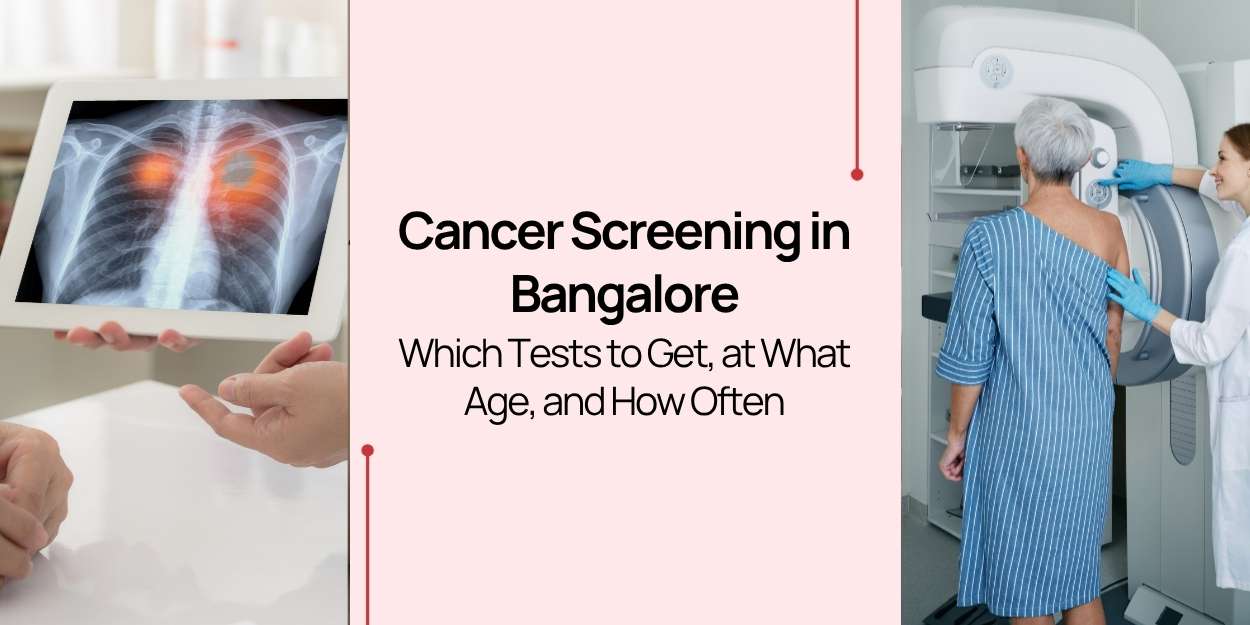
Cancer screening in Bangalore is a topic that most people intend to act on someday but defer indefinitely because they feel well, are busy, or assume screening is only necessary once symptoms appear. This assumption is precisely what makes cancer one of the most dangerous conditions in urban India today. The cancers that respond best to treatment are the ones caught before they produce any symptoms at all, when they are small, localised, and still highly curable. By the time a lump is felt, bleeding is noticed, or unexplained weight loss prompts a visit to the doctor, the window for the most effective treatment has often already narrowed.
Bangalore’s population is increasingly at risk for several cancers that are directly linked to lifestyle, dietary patterns, and occupational stress. Yet cancer screening rates in the city remain far lower than they should be, particularly for cancers where simple, affordable tests can detect changes years before they become life-threatening. This guide sets out clearly which screening tests matter, at what age to begin, and how often to repeat them, based on widely accepted clinical guidelines.
Why Cancer Screening Is Different From Cancer Diagnosis
Screening and diagnosis are related but distinct activities. Cancer screening is performed on people who have no symptoms, with the goal of finding cancer or pre-cancerous changes at the earliest possible stage. Cancer diagnosis, by contrast, is the process of investigating specific symptoms or abnormal findings to determine whether cancer is present.
The value of screening lies precisely in catching cancers before the diagnostic stage is reached. A screening mammogram that detects a tiny cluster of abnormal cells in the breast is finding something that would not become a palpable lump for months or years. That lead time is what makes the difference between a localised, highly treatable cancer and one that has spread beyond its origin.
Understanding this distinction also clarifies why the oncology team at Axon Speciality Hospital in Indiranagar recommends regular screening for all adults over a certain age, regardless of whether they feel unwell. Feeling healthy is not the same as being cancer-free.
Breast Cancer Screening: Who, When, and How Often
Breast cancer is the most commonly diagnosed cancer among women in India and one of the most successfully treated when caught early. In Bangalore, awareness of breast cancer has improved significantly, but screening participation rates remain low.
Clinical screening recommendations for women:
- Women aged 20 to 39: monthly breast self-examination and clinical breast examination by a doctor every one to three years
- Women aged 40 and above: annual mammogram plus clinical breast examination every year
- Women with a family history of breast or ovarian cancer in a first-degree relative: discuss starting mammography screening earlier, from age 30 or as advised by a specialist
- Women who notice any new lump, nipple discharge, skin dimpling, or change in breast shape at any age: immediate clinical evaluation, not a wait for the next scheduled screening
Understanding breast cancer signs and the importance of early detection is an essential part of every woman’s health literacy, regardless of whether a family history of the condition exists.
Cervical Cancer Screening: Who, When, and How Often
Cervical cancer is one of the most preventable cancers when appropriate screening is in place, yet it remains a significant cause of cancer-related deaths among Indian women largely due to low screening rates. The good news is that the tests are simple, accessible, and effective.
- Women aged 21 to 29: Pap smear every three years
- Women aged 30 to 65: Pap smear combined with HPV test every five years, or Pap smear alone every three years
- Women who have received the HPV vaccine should still follow the same screening schedule, since the vaccine does not protect against all HPV strains that cause cervical cancer
- Women over 65 with a history of normal results: may discontinue screening after discussion with a gynaecologist
Colorectal Cancer Screening: Who, When, and How Often
Colorectal cancer, affecting the colon and rectum, is rising in incidence among urban Indians, driven largely by dietary changes, low fibre intake, and sedentary lifestyles. It is also one of the most successfully treated cancers when detected early, and one that can often be prevented entirely when pre-cancerous polyps are found and removed during a routine colonoscopy.
- Adults from age 45 to 75: colonoscopy every ten years if results are normal, or annual faecal occult blood test with colonoscopy if the test is positive
- Adults with a family history of colorectal cancer in a first-degree relative diagnosed before age 60: begin colonoscopy screening at age 40, or ten years before the youngest family member’s diagnosis, whichever comes first
- Anyone experiencing rectal bleeding, unexplained changes in bowel habits, or persistent abdominal pain at any age: immediate evaluation rather than waiting for scheduled screening
A gastroenterologist at Axon Speciality Hospital in Indiranagar can perform colonoscopy and advise on the most appropriate screening interval based on individual risk factors and findings.
Prostate Cancer Screening: Who, When, and How Often
Prostate cancer screening remains one of the more nuanced areas in oncology, since the evidence for routine screening in all men is less straightforward than for breast or cervical cancer. However, for men at elevated risk, early discussion with a specialist is important.
- Men aged 50 and above with average risk: discuss PSA blood test with a doctor to make an informed decision about whether to proceed
- Men aged 45 and above with a first-degree relative diagnosed with prostate cancer: start the discussion earlier
- Men aged 40 and above with more than one first-degree relative with prostate cancer diagnosed at an early age: individual risk assessment with a urologist or oncologist
The prostate-specific antigen (PSA) test is not a definitive cancer diagnosis but a useful indicator of risk. The urology team at Axon Speciality Hospital can help men understand their individual PSA results in the context of their age, family history, and overall health rather than relying on a single number in isolation.
Oral Cancer Screening: Particularly Relevant in India
Oral cancer has a disproportionately high incidence in India compared to Western countries, largely due to the prevalence of tobacco use in various forms including cigarettes, bidis, gutka, and pan masala. Oral cancer is highly curable when detected at an early stage but often presents late because early lesions are painless and easy to overlook.
- Adults who use any form of tobacco or areca nut: oral examination by a doctor or dentist every six to twelve months
- Adults who consume alcohol regularly alongside tobacco use: face a significantly elevated risk and should screen annually from age 40
- Anyone who notices a persistent white or red patch inside the mouth, an ulcer that does not heal within two weeks, or unexplained difficulty swallowing: prompt clinical evaluation regardless of age or tobacco use history
Lung Cancer Screening: For High-Risk Smokers
Lung cancer remains one of the most lethal cancers because it is almost always diagnosed at an advanced stage in patients who had no reason to seek earlier evaluation. For high-risk individuals, however, low-dose CT scanning of the chest has been shown to detect lung cancers at a significantly earlier and more treatable stage.
- Adults aged 50 to 80 with a significant smoking history (equivalent to 20 pack-years or more) who currently smoke or quit within the past 15 years: annual low-dose CT scan of the chest
- Former smokers who quit more than 15 years ago or who never smoked: not currently recommended for routine lung CT screening unless specific symptoms are present
General Cancer Risk Reduction Alongside Screening
Screening detects cancer early but does not prevent it. Alongside regular tests, the following habits meaningfully reduce overall cancer risk:
- Avoiding all forms of tobacco, including smokeless varieties
- Limiting alcohol consumption
- Maintaining a healthy body weight, since obesity is a recognised risk factor for multiple cancers including breast, colon, and endometrial cancer
- Eating a diet rich in vegetables, fruit, and fibre while limiting processed and red meat
- Protecting skin from excessive sun exposure to reduce the risk of skin cancer
- Completing available vaccinations, including HPV vaccination for adolescents and young adults and hepatitis B vaccination, which reduces liver cancer risk
About Axon Speciality Hospital
Axon Speciality Hospital is a leading multispeciality hospital in Indiranagar, Bangalore, serving the local community since 2009. The hospital brings together experienced specialists across orthopedics, spine care, cardiology, nephrology, gastroenterology, urology, oncology, neurology, pain management, palliative care, cosmetology, and anaesthesiology, offering coordinated, patient-first care under one roof, backed by 24/7 emergency services.
Address: 321, 6th Main Rd, HAL 2nd Stage, Indiranagar, Bengaluru, Karnataka 560038
Contact Number: 080 4334 6333
Find Us on Google: Axon Speciality Hospital, Best Multispeciality Hospital in Bangalore
Follow Us: Instagram
The Most Powerful Thing You Can Do Is Start
Cancer is not one disease. It is more than a hundred distinct conditions, each with its own biology, risk factors, and treatment landscape. What most of them share is this: the earlier they are found, the more options exist, and the better the outcomes tend to be. Screening is not about fear or worst-case scenarios. It is about the simple, practical act of knowing, so that if something is there, you find it on your terms rather than its own.
Speak with the oncology and specialist team at Axon Speciality Hospital in Indiranagar, Bangalore to put together a personalised cancer screening plan based on your age, risk profile, and family history.
Frequently Asked Questions
At what age should I start cancer screening in Bangalore?
It depends on the cancer type. Breast cancer screening with mammography typically begins at 40, cervical cancer screening begins at 21, colorectal screening from 45, and prostate screening discussions from 50 for average-risk individuals. People with a family history of any cancer should discuss starting earlier with an oncologist.
Is cancer screening painful or time-consuming?
Most cancer screening tests are straightforward and brief. A Pap smear takes a few minutes. A mammogram takes around fifteen to twenty minutes. Blood tests such as PSA are a simple blood draw. Colonoscopy requires bowel preparation the day before but is performed under sedation. None of these tests should deter routine screening.
If I have no family history of cancer, do I still need to screen?
Yes. The majority of cancer cases occur in people with no family history of the disease. Family history raises the risk but is not a prerequisite for cancer developing. Lifestyle, age, and environmental factors all play significant roles, and routine screening is recommended for all adults above the relevant age thresholds regardless of family history.
What is the difference between a cancer screening test and a cancer diagnosis?
A screening test identifies people at higher risk or with early abnormalities before symptoms appear. A diagnosis is the confirmation of cancer through tests such as biopsy following an abnormal screening result or in response to symptoms. A positive screening result does not mean cancer is present; it means further investigation is needed.
Can cancer screening detect all types of cancer?
No. Effective screening tools exist for only certain cancers, including breast, cervical, colorectal, prostate, oral, and lung cancer under specific conditions. For many other cancer types, no validated screening test currently exists, which is why general risk reduction through healthy lifestyle choices remains important.
How do I know which cancer screening tests I need?
The appropriate tests depend on your age, sex, family history, lifestyle factors, and any personal medical history. A consultation with an oncologist or a general physician familiar with preventive care will help identify which specific tests are relevant for you and at what intervals they should be repeated.
Where can I get cancer screening done in Indiranagar?
Axon Speciality Hospital in HAL 2nd Stage, Indiranagar, has an oncology department with specialist cancer doctors who can guide patients through appropriate screening based on individual risk profiles and arrange necessary investigations within the same facility.