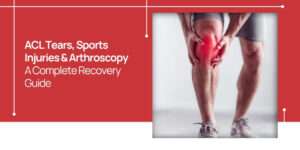
ACL Tears, Sports Injuries & Arthroscopy: A Complete Recovery Guide
ACL surgery in Bangalore has become an increasingly common search term among the city’s growing population of recreational athletes, weekend footballers, marathon runners, and gym enthusiasts. As more people in Bangalore take up sports and fitness activities outside of work, the number of ligament injuries, particularly anterior cruciate ligament tears, has risen alongside it. Understanding what an ACL injury actually involves, how it is diagnosed, and what recovery realistically looks like can make the difference between a full return to activity and a recurring injury that never quite heals properly.
This guide breaks down everything from how ACL tears happen to what arthroscopic surgery involves and what recovery actually demands from a patient.
What Is the ACL and Why Does It Tear So Easily?
The anterior cruciate ligament, commonly called the ACL, is one of the key stabilising ligaments inside the knee joint. It connects the thigh bone to the shin bone and controls forward movement and rotation of the knee. Because the ACL plays such a central role in stabilising sudden directional changes, it is particularly vulnerable during sports that involve quick pivots, sudden stops, or jumping and landing, such as football, basketball, badminton, and trekking on uneven terrain.
Most ACL tears happen without any contact at all. A sudden change in direction, an awkward landing, or a knee that twists while the foot stays planted is often enough to tear the ligament. This is why ACL injuries are so common even among recreational players who are not engaged in contact sports.
Recognising the Signs of an ACL Injury
Most patients describe a distinct popping sound or sensation at the moment of injury, followed by immediate swelling within hours. Other common signs include:
- A feeling that the knee is unstable or about to give way
- Significant swelling that develops rapidly after the injury
- Difficulty bearing weight on the affected leg
- Loss of full range of motion in the knee
- Pain along the joint line, particularly with twisting movements
If you experience these symptoms after a sporting activity or sudden fall, it is important to consult an orthopedic hospital in Indiranagar promptly rather than waiting to see if the swelling resolves on its own. Delayed diagnosis can allow the knee to develop further instability and increase the risk of additional damage to surrounding cartilage.
How ACL Tears Are Diagnosed
Diagnosis typically begins with a physical examination, where the doctor checks knee stability through specific movement tests. This is usually followed by an MRI scan, which provides a clear image of the ligament and helps determine whether the tear is partial or complete, and whether other structures such as the meniscus or surrounding cartilage have also been affected.
A sports injury specialist in Bangalore can accurately distinguish between a minor sprain that may heal with conservative treatment and a complete tear that requires surgical reconstruction, which is an important distinction since the wrong initial approach can delay proper recovery by months.
What Is Arthroscopy and How Does It Help?
Arthroscopy is a minimally invasive surgical technique that allows surgeons to view and repair the inside of a joint through small incisions, using a tiny camera and specialised instruments. For ACL reconstruction, arthroscopy has become the standard approach because it significantly reduces surgical trauma compared to traditional open surgery.
During an arthroscopic ACL reconstruction, the torn ligament is removed and replaced with a graft, typically taken from the patient’s own hamstring or patellar tendon. The procedure is performed through small incisions, which means less scarring, reduced post-operative pain, and a faster initial recovery compared to open surgery.
Not All ACL Tears Require Surgery
It is a common misconception that every ACL tear automatically requires surgical reconstruction. For less active individuals, or for partial tears where the knee remains relatively stable, a structured non-surgical rehabilitation programme focused on strengthening the surrounding muscles can sometimes be sufficient. However, for athletes, active individuals, or anyone with a complete tear and ongoing instability, surgical reconstruction is generally recommended to restore full function and prevent further joint damage over time.
Recovery Timeline After ACL Surgery
Weeks 1 to 2: Initial Healing
The focus immediately after surgery is on controlling swelling and pain while protecting the new graft. Gentle range-of-motion exercises and weight-bearing as tolerated, guided by a physiotherapist, typically begin within the first few days.
Weeks 3 to 6: Building Strength
As swelling subsides, exercises progress toward restoring full range of motion and beginning light strengthening of the surrounding muscles, particularly the quadriceps, which often weaken significantly after knee surgery.
Months 2 to 4: Functional Rehabilitation
This phase introduces more demanding strengthening exercises, balance training, and the gradual reintroduction of activities such as cycling or swimming, depending on individual progress.
Months 5 to 9: Return to Sport
Most surgeons and physiotherapists recommend waiting at least six to nine months before returning to competitive sport, since the graft needs sufficient time to fully integrate and regain strength. Returning too early significantly increases the risk of re-injury.
Throughout this entire process, physiotherapy after surgery plays a decisive role in the final outcome, often determining whether a patient regains full athletic confidence or continues to experience instability long after the surgical site has healed.
Preventing Future ACL Injuries
Patients who have undergone ACL reconstruction, as well as those who want to reduce their risk of a first-time injury, benefit from targeted prevention strategies. These include strengthening the hamstrings and glutes to better support the knee joint, practising proper landing technique during jumping sports, incorporating balance and proprioception training into regular workouts, and avoiding a rapid return to high-intensity sport without adequate conditioning.
About Axon Speciality Hospital
Axon Speciality Hospital is a leading multispeciality hospital in Indiranagar, Bangalore, serving the local community since 2009. The hospital brings together experienced specialists across orthopedics, spine care, cardiology, nephrology, gastroenterology, urology, oncology, neurology, pain management, palliative care, cosmetology, and anaesthesiology, offering coordinated, patient-first care under one roof, backed by 24/7 emergency services.
Address: 321, 6th Main Rd, HAL 2nd Stage, Indiranagar, Bengaluru, Karnataka 560038
Contact Number: 080 4334 6333
Find Us on Google: Axon Speciality Hospital, Best Multispeciality Hospital in Bangalore
Follow Us: Instagram
Getting Back to the Activities You Love
An ACL tear can feel like a major setback, but with the right diagnosis, the right surgical approach when needed, and a committed rehabilitation programme, the vast majority of patients return to full activity and sport. The key is acting early, choosing a coordinated care team, and respecting the recovery timeline rather than rushing back too soon.
If you suspect a ligament injury or are dealing with a recent sports injury, consult the specialist team at Axon Speciality Hospital in Indiranagar for accurate diagnosis and a complete treatment plan from evaluation through to full recovery.
Frequently Asked Questions
Q1. How long does it take to recover from ACL surgery in Bangalore?
Most patients recovering from ACL surgery in Bangalore can expect a full return to competitive sport within six to nine months, though basic daily activities and walking typically resume much earlier, often within four to six weeks of surgery.
Q2. Is arthroscopic ACL surgery painful?
Because arthroscopy is minimally invasive, post-surgical pain after ACL reconstruction is generally less severe than with traditional open surgery. Most patients manage discomfort effectively with prescribed pain medication during the first one to two weeks.
Q3. Can I avoid surgery if I have a partial ACL tear?
Yes, in some cases. Partial ACL tears in individuals who are not highly active and whose knee remains stable may be managed through structured physiotherapy alone, though this decision should always be confirmed by an orthopedic specialist after assessing knee stability.
Q4. What is the difference between ACL surgery and arthroscopy?
Arthroscopy is the surgical technique used to perform ACL reconstruction. It refers to a minimally invasive method using small incisions and a camera, rather than a separate type of surgery, allowing the torn ligament to be repaired with less tissue damage than open surgery.
Q5. How do I know if I need to see a sports injury specialist in Bangalore?
You should see a sports injury specialist if you experience a popping sensation during physical activity followed by swelling, knee instability, or difficulty bearing weight, especially after sports involving sudden pivots, jumps, or direction changes such as football or badminton.
Q6. What graft is used for ACL reconstruction surgery?
ACL reconstruction typically uses a graft taken from the patient’s own hamstring or patellar tendon, which is then used to rebuild the torn ligament. The choice between graft types depends on the patient’s activity level, age, and the surgeon’s clinical assessment.
Q7. When can I return to playing sports after ACL reconstruction?
Most orthopedic surgeons and physiotherapists recommend waiting at least six to nine months before returning to competitive sport after ACL reconstruction, since the graft needs sufficient time to fully integrate and regain strength, and returning too early significantly increases the risk of re-injury.