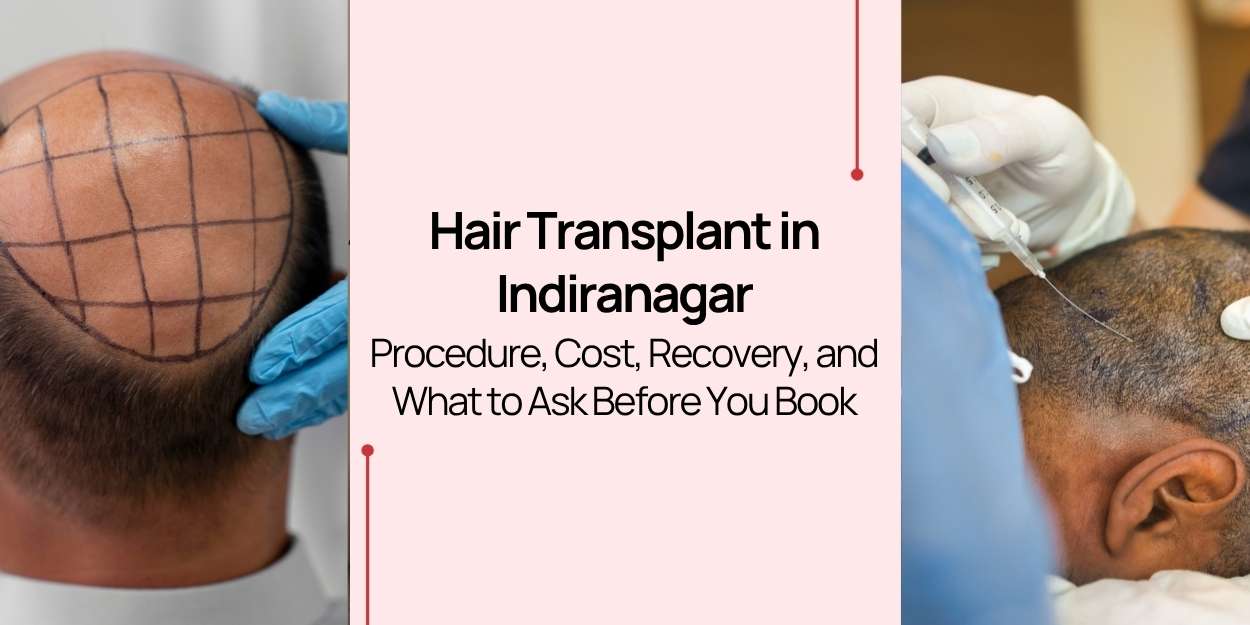
Hair Transplant in Indiranagar: Procedure, Cost, Recovery, and What to Ask Before You Book
Hair transplant clinic in Indiranagar is one of the fastest-growing searches in Bangalore’s cosmetic healthcare space, and the demand reflects a genuine shift in how people in the city approach hair loss. What was once a concern largely whispered about or quietly managed with hats and treatments is now openly discussed, with thousands of men and women in their 20s, 30s, and 40s actively seeking permanent, natural-looking solutions. Hair transplantation has matured significantly as a procedure over the past decade, and the results available today are vastly different from the visible, unnatural plugs associated with early techniques.
If you are considering a hair transplant in Bangalore, this guide walks you through everything you genuinely need to know before booking a consultation, from how the procedure works to what realistic costs and recovery look like, and the questions you should ask before committing to any clinic.
What Is Hair Transplantation and How Does It Work?
Hair transplantation is a surgical procedure that moves hair follicles from a donor area, typically the back or sides of the scalp where hair is genetically resistant to thinning, to areas where hair loss or thinning has occurred. Because the transplanted follicles retain their original genetic resistance to hair loss, the results are permanent once the transplanted hair has fully grown in.
The procedure is performed under local anaesthesia, meaning the patient is awake but comfortable throughout. Most sessions last between four and eight hours depending on the number of grafts being transplanted, and the patient can return home the same day.
FUE vs FUT: Understanding the Two Main Techniques
Follicular Unit Extraction (FUE)
FUE is currently the most widely performed hair transplant technique in India. Individual follicular units, each containing one to four hair strands, are extracted directly from the donor area using a small punch tool and implanted into the recipient area. Because each follicle is extracted individually, there is no linear scar, making FUE suitable for patients who prefer to wear their hair short.
Recovery after FUE is relatively quick. Most patients can return to desk work within three to five days, and the small extraction sites heal within one to two weeks. FUE is generally the preferred technique for patients undergoing their first transplant with a well-defined area of loss.
Follicular Unit Transplantation (FUT)
FUT involves removing a thin strip of scalp from the donor area, from which individual follicular units are then dissected and implanted. FUT leaves a linear scar along the back of the scalp, which is typically concealed by surrounding hair but becomes visible if the head is shaved. FUT can yield a higher number of grafts in a single session, making it suitable for patients with more extensive hair loss who require greater coverage.
Both techniques, when performed by an experienced cosmetic surgeon, produce natural-looking results. The choice between them depends on the extent of hair loss, the quality and density of the donor area, and the patient’s lifestyle preferences.
What Causes Hair Loss in the First Place?
Understanding the underlying cause of hair loss is an important first step before any transplant consultation, because not all types of hair loss are suitable for transplantation. The most common cause is androgenetic alopecia, also called male or female pattern baldness, which is genetically driven and progressive. This is the most appropriate condition for hair transplantation since the donor hair remains stable.
Other causes of hair loss include stress-related shedding (telogen effluvium), thyroid dysfunction, nutritional deficiencies, scalp conditions, and hormonal changes. For these types of hair loss, treating the underlying cause is often more important than transplantation, and a qualified cosmetic specialist will assess this before recommending surgery.
Who Is a Good Candidate for a Hair Transplant?
Not every person experiencing hair loss is an appropriate candidate for a transplant. The procedure works best when:
- Hair loss has stabilised and is not actively progressing rapidly
- The donor area at the back and sides of the scalp has adequate density and quality
- The patient has realistic expectations about the degree of coverage achievable
- The individual is in good general health without conditions that significantly impair wound healing
- The patient is over the age of 25, since hair loss patterns are more predictable after this age
A thorough consultation with a cosmetic surgeon, including a scalp assessment and discussion of hair loss history, is essential before a decision is made. This is also the point at which the surgeon should be honest about what is and is not achievable for a specific patient’s hair loss pattern.
Hair Transplant Cost in Bangalore: What Factors Affect the Price
Hair transplant cost in Bangalore is typically quoted per graft, with each graft containing one to four hair follicles. Prices vary depending on several factors:
- The number of grafts required, which depends on the extent of hair loss and the density the patient wants to achieve
- The technique used (FUE generally costs more per graft than FUT due to the precision required)
- The experience and qualifications of the surgeon performing the procedure
- The quality of the facility, including anaesthesia services, post-procedure care, and follow-up support
As a general guide, most patients undergoing FUE in Bangalore require between 1,500 and 4,000 grafts depending on the degree of baldness, and pricing can vary significantly between clinics. It is important to get a complete cost breakdown that includes the consultation, the procedure itself, anaesthesia, post-operative medications, and follow-up visits, rather than comparing headline per-graft prices alone.
At Axon Speciality Hospital’s cosmetology and aesthetics department in Indiranagar, transparent pricing and a thorough pre-procedure consultation are part of the standard process, ensuring patients understand exactly what they are committing to before any decision is made.
What the Recovery Timeline Actually Looks Like
Week 1
The scalp will be tender and there will be visible redness and small scabs at both the donor and recipient sites. Sleeping with the head elevated is recommended to reduce swelling. Patients should avoid any strenuous activity and protect the scalp from direct sun exposure.
Weeks 2 to 4
The transplanted hairs will begin to shed, which is a completely normal part of the process called shock loss. This can be alarming for patients who are not prepared for it, but it is expected. The follicles themselves remain intact beneath the scalp surface and will begin producing new hair growth in the coming months.
Months 3 to 6
New hair growth begins to emerge from the transplanted follicles. Initial growth is fine and may be lighter in colour than surrounding hair. The hairline gradually begins to take shape during this period.
Months 9 to 12
The majority of the final result is visible by months nine to twelve. Hair texture normalises, density increases, and the transplanted area blends naturally with surrounding hair. Full results are typically assessed at the twelve-month mark.
Questions to Ask Before Booking a Hair Transplant in Indiranagar
The quality of the clinic and surgeon matters as much as the technique. Before committing, ask:
- Is the procedure performed by a qualified cosmetic surgeon or delegated to technicians?
- Can I see before and after photographs of actual patients treated at this facility?
- How many grafts do you estimate I will need, and how was that number determined?
- What anaesthesia will be used and who administers it?
- What is included in the quoted price, specifically follow-up consultations and post-operative medications?
- What happens if the results are not as expected? Is there a revision policy?
These questions protect you as a patient and help you distinguish between facilities that prioritise outcomes and those that prioritise throughput. Having your procedure at a multispeciality hospital with a dedicated cosmetic surgery team means anaesthesia is handled by a qualified anaesthesiologist and any unexpected complications can be managed within the same facility rather than requiring transfer elsewhere.
Hair Transplant as Part of a Broader Cosmetic Care Plan
Many patients who come in for a hair transplant consultation also have questions about related cosmetic concerns such as skin texture, scarring, or facial rejuvenation. A comprehensive cosmetology and aesthetic centre in Bangalore can address these within the same visit, providing a coordinated plan that considers the patient’s overall aesthetic goals rather than a single isolated procedure.
Patients considering how plastic surgery and cosmetic procedures can improve confidence and wellbeing will find that hair restoration is among the procedures with the highest reported impact on self-image, particularly for younger patients experiencing early-onset hair loss that affects professional and social confidence.
About Axon Speciality Hospital
Axon Speciality Hospital is a leading multispeciality hospital in Indiranagar, Bangalore, serving the local community since 2009. The hospital brings together experienced specialists across orthopedics, spine care, cardiology, nephrology, gastroenterology, urology, oncology, neurology, pain management, palliative care, cosmetology, and anaesthesiology, offering coordinated, patient-first care under one roof, backed by 24/7 emergency services.
Address: 321, 6th Main Rd, HAL 2nd Stage, Indiranagar, Bengaluru, Karnataka 560038
Contact Number: 080 4334 6333
Find Us on Google: Axon Speciality Hospital, Best Multispeciality Hospital in Bangalore
Follow Us: Instagram
The Right Consultation Changes Everything
A hair transplant is not an impulsive decision, and the best outcomes come from patients who took the time to choose the right surgeon, ask the right questions, and go into the procedure with accurate expectations. For residents of Indiranagar, Domlur, and HAL 2nd Stage, having access to a qualified cosmetic surgeon within a hospital-grade facility locally removes both the travel barrier and the safety uncertainty that standalone clinics can sometimes present.
Book a consultation with the cosmetology and cosmetic surgery team at Axon Speciality Hospital in Indiranagar to get an honest, personalised assessment of your hair loss pattern and understand exactly what results are achievable for you.
Frequently Asked Questions
Is hair transplant a permanent solution for hair loss?
Yes, the transplanted follicles are genetically resistant to the hormonal process that causes pattern baldness, so the hair that grows from them is permanent. However, existing non-transplanted hair can continue to thin over time, which is why some patients return for a second session years later to address new areas of loss.
How many grafts do I need for a full hair transplant?
This depends entirely on the extent of hair loss and the density you want to achieve. A small frontal hairline restoration may need 1,000 to 1,500 grafts, while more extensive baldness covering the crown and mid-scalp can require 3,000 grafts or more. Only a scalp assessment by a qualified surgeon can give an accurate estimate.
Is hair transplant surgery painful?
The procedure is performed under local anaesthesia, so patients experience minimal discomfort during the session. Some tenderness and mild soreness in both the donor and recipient areas is expected in the first few days after the procedure, which is typically managed with prescribed pain relief.
Can women get hair transplants?
Yes, women can undergo hair transplantation, though the pattern of hair loss in women is often diffuse rather than concentrated, which affects candidacy. Women with localised thinning or hairline recession are generally better candidates than those with widespread diffuse thinning. A specialist evaluation is essential.
When will I see the final results after a hair transplant in Bangalore?
Most patients see the majority of their final result by nine to twelve months after the procedure. Initial growth begins around months three to four, but the hair is fine and sparse at first. Full density and texture normalisation typically takes until the twelve-month mark.
What should I avoid after a hair transplant?
For the first two weeks, avoid direct sun exposure on the scalp, strenuous exercise, swimming, and any activity that causes significant sweating. Hair washing follows a specific protocol in the first week. Your surgeon will provide detailed post-operative instructions tailored to the technique used.
Is it safe to get a hair transplant at a hospital rather than a standalone clinic?
A hospital setting offers additional safety advantages, including a qualified anaesthesiologist managing sedation and local anaesthesia, access to emergency support if needed, and post-operative monitoring. For a surgical procedure, even one done under local anaesthesia, the infrastructure of a multispeciality hospital provides an extra layer of clinical safety.